Exclusively Inclusive.
By Karen Brain
This year, I’ve noticed more polarization within this country than ever before in my lifetime. As we move into the holiday season, I wonder how this may impact festivities, if at all. If we spend time with like-minded individuals or follow strict rules not to discuss certain subjects, maybe there won’t be a negative impact. But how do we best handle uncomfortable situations where those controversial or polarizing topics are discussed?
If it happens during the company party, maybe we can escape it. But what if it’s during our family’s holiday dinner? What if we’re in the closet, so to speak, regarding our identity or stance on an issue, and those discussing it don’t realize it? Or what if we are out and they realize it but still discuss their opposing views anyway, or talk around us? Despite dealing with these scenarios for decades, I don’t have the right answers; I just know what I did when this happened within my family.
Growing up, my dad’s immediate family was local. Family was always extremely important, and with that, attending family gatherings and observing traditions on every holiday, anniversary, and birthday was expected. Yet, with the exception of my parents, I always felt uncomfortable and emotionally unsafe around the adults in my small San Diego family because I was different.
Grandma was the overbearing matriarch of our small family. While she did the stereotypical “grandma things” like spoiling her grandchildren and sharing baked goods, she ruled with an iron fist. She expected every family gathering to happen in a certain way; her way. Actually, she wanted everything to follow or align with her beliefs, methods, and traditions. To be fair, she was very wise and had some great ideas, but she certainly didn’t accept differences. As Grandpa would say, “Life is easier if we just say yes to her.” So it was “Grandma’s Way,” or a battle ensued, usually with her winning due to exhaustion from her opponents.
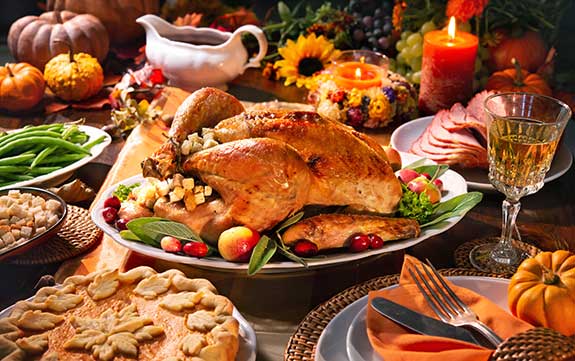
Grandma’s favorite holiday was Christmas. It was always celebrated in her home, and she decorated it beautifully. She always made turkey for dinner and some weird Jello dish from the 1950s, and delegated the traditional side dishes and desserts to other family members. It was like a duplicate Thanksgiving, but with presents and different decorations.
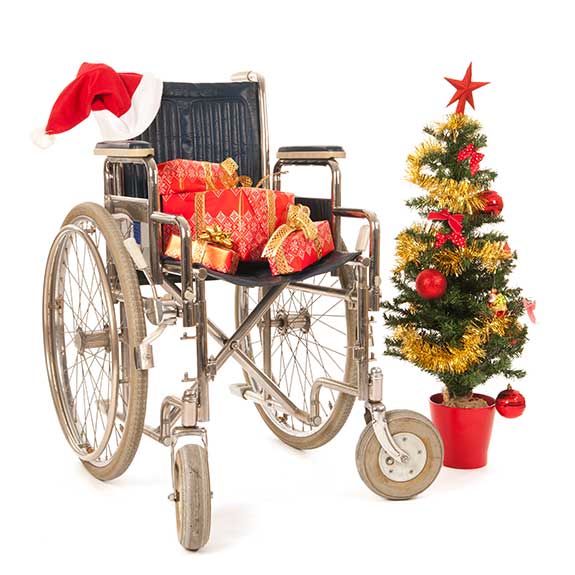
Stronger than Grandma’s iron fist was my Juvenile Rheumatoid Arthritis (JRA, diagnosed at age 1½). While arthritis is a pretty common diagnosis for humans, JRA is not as common; I’m the only person in my family with JRA. Living with this disability is a life of unpredictable but constant change, which sometimes requires contradicting social norms and traditions…and Grandma’s expectations. It always felt like Grandma’s world required rigidity (her choice), while mine required flexibility and adaptability (not my choice, it was survival).
Arthritis does what it wants when it wants, regardless of what one may want to do. It makes future planning extremely difficult, whether “future” means an hour from now, next year, or decades later. Things rarely go according to plan, whether due to sudden pain, physical limitations, or emergency surgery, for example. Being flexible and adaptable allows me to survive in a world still far from accessible or inclusive.
All this unpredictability and need to do things differently seemed not to sit well with Grandma. She believed things either must be done a certain way, like it’s unthinkable to do it differently, or she had the best methods to do it, as in it’s stupid to do it any other way. Not following these “standards” was looked down upon, as were those who supported anyone who didn’t.
Like my mom, who is fiercely independent and unapologetically disagrees with Grandma on most things. I’m sure Dad’s position in the middle was fun. Not only has my mom always been my biggest advocate, protector, and support system, but she has also never been afraid to challenge her mother-in-law, privately or in front of others. It felt like Mom vs. Grandma was some version of Luke Skywalker vs. Darth Vader, with me riding on Mom’s back like Yoda rode Luke’s.
Being part of a close family with a domineering, rigid family leader can be difficult. For me to be a member of Grandma’s Clan felt worse. Her orders and strong opinions went far beyond my disability. From my choice of nail polish to possible career, she always had something critical to say. Many times, I felt punished, excluded, and/or pitied by Grandma for being different and doing things differently than Grandma’s Way, which made me very sad. Growing up, except for my mom, I never saw others defend or advocate for me, or others under Grandma’s scrutiny, which made me very mad. Sometimes I wondered if anyone else felt like me, as her judgments weren’t reserved for just me. It’s one thing to experience negative responses or silence from society for being different, but it’s next level to get it from family.
Our frequent family events seemed to be consumed with religious, social, and political discussions. Where “discussions” meant mean, angry, judgmental statements about others who were different. As I grew older, I formed my own opinions and beliefs about various topics, which seemed to be polar opposite to theirs. This created an additional layer of difficulty for me, to say the least. At each event, I watched that monotonous group with their monotonous discussions, which felt suffocating. I was the youngest and wondered if I was really related to them; how could I be related to this group?! A few stayed quiet, but other than Mom’s occasional input, I never observed opposition during those discussions. Sometimes I’d share information and/or try to politely change the subject, but it felt like it was useless. Apparently, sharing hate was the true meaning of Christmas. I felt that if I really provided opposition, it would increase my feelings of exclusion, judgment, and negative perception. For self-care purposes, I chose to stay quiet and not attend events with Grandma’s Clan as often.

I also chose to stay quiet about the details of my life. I provided many “I don’t know” and “nothing much” answers when questioned. The more they spoke, the more I understood how they really felt about issues, and the quieter I became. As a young adult, I realized I love diversity and learning about different cultures and beliefs. I fought for equity and social justice when I could. Whereas they…didn’t. I knew without being told directly that if I dated anyone other than a cisgender heterosexual male of the same race and religion (they assumed I shared their faith), it would be a problem. I discovered that having LGBTQ+ friends was problematic, too. So I became even quieter.
During high school, a few of my friends came out as LGBTQ+. This was when I first learned about the similarities between the disability and LGBTQ+ communities as my friends and I discussed our life experiences. They also shared stories of their unique challenges, being closeted, exclusions, and discriminations directly related to identifying as LGBTQ+, and I shared my disability-related comparable stories with them.
At my college, there were hate crimes committed against LGBTQ+ students. I felt it was important to become vocal and known as an LGBTQ+ ally in efforts to increase awareness and inclusion on campus. This role led to learning much more about LGBTQ+ history and culture, which led to identifying more similarities between our two communities. I started looking more deeply into politics and social justice issues beyond the disability and LGBTQ+ communities.
I felt like a hypocrite for working so hard to increase awareness and inclusion in one space, while listening to family members dominate the conversation with opposing views and occasional hate speech in another space. I had already stopped seeing them as often, but now I felt the need to take a greater stand; I wanted to stop attending their events altogether. I talked about this plan with my parents first. Since it seemed the majority of Grandma’s Clan shared the same opinions and enjoyed discussing them, or they weren’t as impacted by them as I was, I didn’t think it was fair to ask them to stop those discussions in my presence while in their homes. But it also wasn’t fair to expect me to attend when those discussions monopolized every event, and the family knew they upset me greatly.
So I did it; I started spending time with my parents, but not Grandma’s Clan. I told my parents that if anyone asked why I wasn’t there, tell them I didn’t want to spend my time suffocated by negativity. Once I made that decision, I felt so free. Spending the holidays alone was better than spending them at Grandma’s. Luckily, I had great friends who invited me to celebrate holidays with their loved ones.
Eventually, Grandma called me to talk about it. I explained to her that I would no longer spend my time in an environment of judgment and hate, especially when it should be a time of love, joy, and celebration. I asked her, “Have you ever wondered why I’ve never brought anyone I was dating to our family events? Three reasons: Whoever I’d bring, I know your clan would not approve; I would never want to bring someone I cared about into such a negative, hateful environment; and I wouldn’t want them to assume I shared your views.” As if she hadn’t heard any of that, she asked me next, “Why do you prefer to spend holidays with friends instead of with your family?” I answered with a question, “How would you feel if I were dating someone of a different race or religion, had a disability, or if I had a girlfriend instead of a boyfriend?” She said, “We’d get used to it.” That’s a damn lie, but I said, “That’s why, Grandma, because my friends wouldn’t need to ‘get used to it.’ It wouldn’t even be an issue. My friends would embrace them just as they embrace me, which is exactly the environment I would want us to be in, always.”
Grandma was not happy, to say the least. Her silent anger was palpable through the phone. But it felt good to finally tell her my truth. It felt like I slammed the door on future events with Grandma’s Clan, and I felt even freer. This also created space in my home to host Friendsgiving for my friends and their partners who didn’t have another local, supportive environment for the holidays. I would celebrate the holiday with my parents one day and have Friendsgiving on another. Sometimes my parents would make an appearance at Friendsgiving, too.
While it was a difficult action to take, ending my events with Grandma’s Clan was the right thing for me to do. I’ve never regretted it. I always hoped they would stop being so angry about the actions of strangers in the news and find peace. (Maybe they hoped I would change too?) I am so grateful to my friends who provided a safe space during the holidays, and to myself for taking a terrifying step in what turned out to be the right direction.
Sometimes the unknown is so scary that we stay in the comfort of the negative for too long. It may take protecting our friends and loved ones from the negative to realize we need that protection for ourselves, too. Stepping outside our usual bubbles allows us to learn about different ways of life and to assess whether we may want to change our own. After all, if we look closely and stop “othering”, I believe we’ll find we have more in common with each other than not. I hope you’re able to protect yourself from the negatives to enjoy this holiday season. May the New Year bring more positives and peace for us all!
This article was originally published in the 2025 Holiday Issue of Las Vegas PRIDE Magazine, and can be read in its original format here.