“Almost Us”: Love, Power, and the Spaces That Hold Us Together
By Las Vegas PRIDE Magazine Staff
Photography courtesy of Project Publicity
In a cinematic landscape where queer stories are often flattened into familiar arcs of coming out or tragedy, Anthony Bawn is carving out something far more layered with Almost Us. Premiering April 17 on Watch VIM, the new romantic dramedy delivers heat, humor, and emotional honesty—while asking deeper questions about love, power, and the cost of belonging.
Set against the evolving backdrop of Phoenix, Almost Us introduces audiences to Darren, a closeted and politically connected real estate developer, and Jason, an openly queer community organizer.
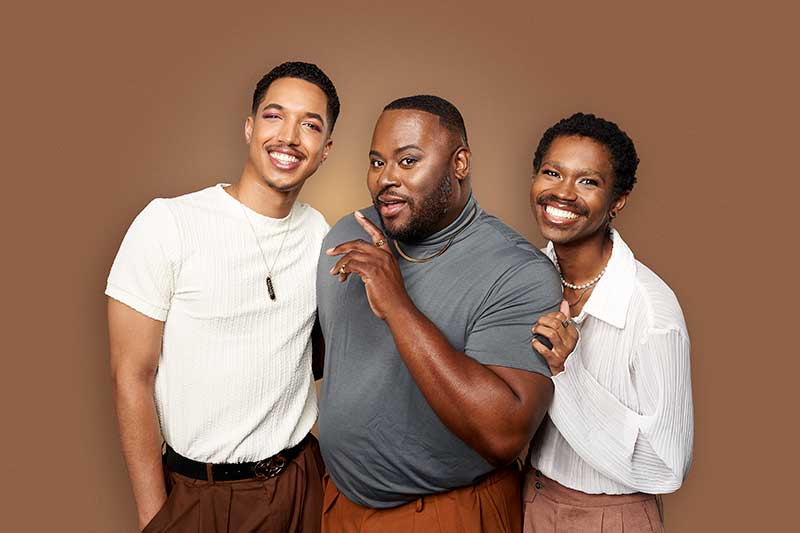
(L-R) Marcus (Isaiah Ware), Jason Cooper (Anthony Bawn), Antwan (Shannon D. Woods)
What begins as a charged one-night stand quickly spirals into something far more complicated when Darren’s redevelopment project threatens the Baldwin Cultural Center—a vital LGBTQ hub that Jason is fighting to protect.
But for Bawn, this isn’t just a love story. It’s a story about everything that gets in the way of love.
Messy, Honest, and Unapologetically Real
From the beginning, Bawn set out to challenge the boundaries of queer storytelling—particularly for Black queer men.
“I wanted the kind of romance comedy we don’t always get to see told honestly,” he explains. “Not the fantasy version. Not the trauma-porn version. Just real people making complicated choices.”
That commitment to authenticity pulses through every layer of Almost Us. Rather than presenting polished, idealized romance, the film leans into contradiction—into the reality that people can deeply want each other and still be divided by fear, ambition, class, or timing.
“Sometimes the love is there,” Bawn says. “The circumstance is the problem. And sometimes… the people are the problem too.”
It’s that tension—between desire and reality—that gives the film its emotional bite.

(L-R) Jason Cooper (Anthony Bawn), Darren Bennett (Adri Kennedy)
When Love and Leverage Collide
At the heart of Almost Us is the volatile chemistry between Darren and Jason—two men navigating not only their attraction, but the systems and identities that shape them.
“They’re speaking different emotional languages,” Bawn explains. “They’re different in what they can afford, how they protect themselves, and what they think love is supposed to cost.”
Their relationship exists in a moral gray zone where affection and agenda coexist—a concept Bawn describes bluntly as “love and leverage.”
“Sometimes people love each other, and sometimes they’re also using the relationship to survive… to escape… to avoid loneliness,” he says. “Love doesn’t cancel out power.”
That honesty is what makes Almost Us feel so grounded. There are no easy heroes or villains—just people navigating the complicated intersections of vulnerability, desire, and self-preservation.
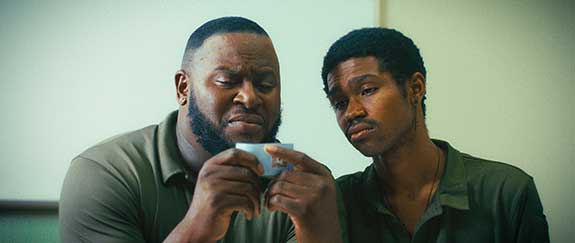
(L-R) Jason Cooper (Anthony Bawn), Antwan (Shannon D. Woods)
A Love Story Rooted in Community
While the romance drives the narrative, the soul of Almost Us lies in the Baldwin Cultural Center—a space that represents far more than its physical walls.
“It’s a sanctuary, a memory bank, a lifeline,” Bawn says. “It’s proof that people were there, loved there, built there.”
By centering the story around a threatened community space, the film expands beyond personal relationships into something more urgent. It confronts the realities of gentrification, displacement, and the erasure of queer spaces—issues that resonate far beyond Phoenix.
“Romance doesn’t happen in a vacuum,” Bawn emphasizes. “Where you live matters. Who gets pushed out matters.”
In this way, Almost Us becomes both intimate and political, reminding audiences that love and community are deeply intertwined.
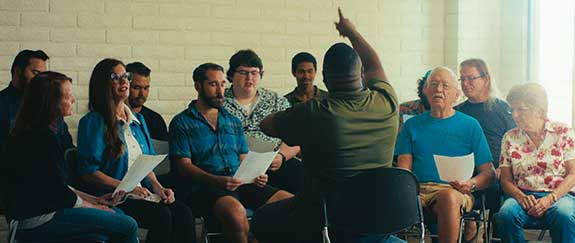
Jason Cooper (Anthony Bawn) directs the community center’s choir
Building Something Against the Odds
Behind the camera, Bawn faced challenges that mirrored the film’s themes of perseverance and near-misses. Serving as director, writer, producer, and lead actor, he describes the process as “wearing about ten hats while trying not to lose my mind.”
Production hurdles—from missed flights to major rewrites—nearly derailed the film entirely.
“There were honestly times I almost walked away,” he admits. “The film itself almost didn’t make it here.”
And yet, that struggle became part of the story’s DNA.
“The title Almost Us started to feel personal,” Bawn reflects. “Because the film itself almost didn’t happen.”
Despite the chaos, moments of unexpected brilliance emerged—particularly from cast members who stepped into larger roles under pressure.
“That’s when you see who’s ready,” he says. “Who shows up when it counts.”
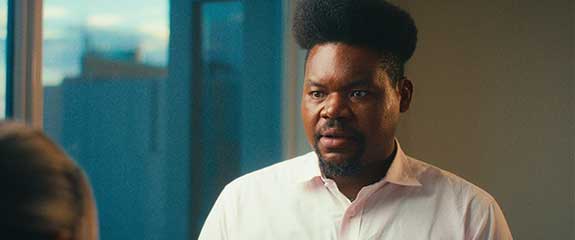
Eric Bennet (Devere Rogers)
Why Phoenix Matters
The choice to set the film in Phoenix was intentional. Often overlooked in queer cinema, the city’s contradictions—beauty and harshness, growth and displacement—mirror the emotional terrain of the story.
“The desert is exposed, intense, isolating,” Bawn says. “That felt very Almost Us.”
Like the characters themselves, the setting holds both restraint and fire—quiet on the surface, but burning underneath.
Beyond Coming Out: Expanding Queer Narratives
One of the film’s most powerful contributions is its refusal to center queerness solely around identity revelation. Instead, Almost Us explores adulthood—desire, compromise, ambition, and consequence.
“Queer life does not begin and end with coming out,” Bawn says. “We deserve plots. We deserve inner lives.”
He is particularly passionate about expanding representation for Black queer men, pushing back against narrow portrayals often seen in mainstream media.
“We are not all one way,” he says. “We are soft, masculine, messy, polished, healing—all of it.”
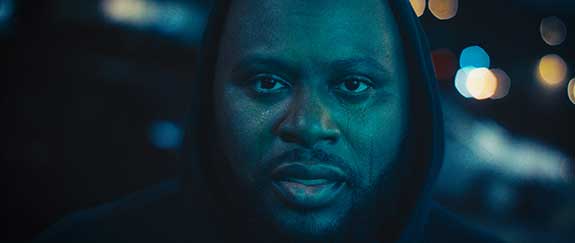
Jason Cooper (Anthony Bawn)
Creating Space On and Off Screen
That same philosophy extends beyond the film itself with the launch of Watch VIM, the streaming platform Bawn created to premiere Almost Us.
“I got tired of waiting for permission,” he says. “There are too many strong voices that get treated like a niche inside a niche.”
By offering free access while encouraging support, Watch VIM aims to strike a balance between accessibility and sustainability—ensuring that stories like Almost Us not only reach audiences, but continue to be made.
The Ache of “Almost”
At its core, Almost Us is about the relationships that almost become something more—the ones that linger, not because they failed, but because they mattered.
“It’s the ache of being close,” Bawn says. “Close to love, close to honesty… but not quite getting there.”
That emotional residue is what he hopes audiences carry with them long after the credits roll.
“I want people to feel seen,” he adds. “To sit with that space between possibility and commitment. Because that ‘almost’… it stays with you.”
With its sharp wit, undeniable chemistry, and unflinching honesty, Almost Us doesn’t just tell a love story—it reflects the complicated, beautiful, and sometimes painful realities of being human. And in doing so, it reminds us that even when love doesn’t fully arrive, its impact can still be lasting.
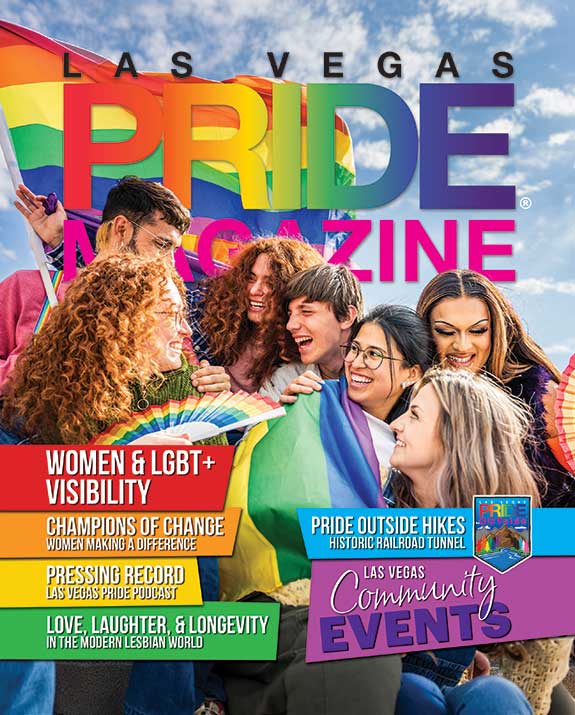
This article was originally published as a digital exclusive for the 2026 Women & LGBTQIA+ Visibility Issue of Las Vegas PRIDE Magazine, which can be read in its original format here.