
Listening With Intention: Rae Canady’s Vision for a Community-Centered Court
By Jake Naylor
When Rae Canady talks about justice, she doesn’t begin with statutes or courtrooms. She begins with people.
Raised in the Midwest as the youngest of four girls, Canady learned early how to make her voice heard. “In a household with loud older sisters, I definitely had to speak up,” she says with a laugh. But beyond sibling dynamics, it was the region’s cultural values: hard work, integrity, humility, and community care, that shaped her foundation. Those principles still anchor her today as she runs for Las Vegas Municipal Court Judge, Department 1.
Her family’s story is also deeply rooted in civil rights history. Her parents, an interracial couple, married the same year the U.S. Supreme Court decided Loving v. Virginia. That legacy of love and courage continues to inform her understanding of equality. “Love is love,” she says. “Whether it’s between people of different races or people of different sexes, today’s LGBTQIA+ equality efforts are about basic human rights.”
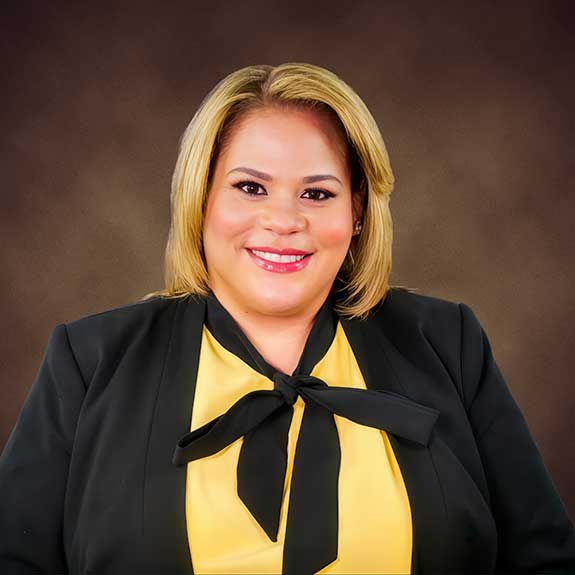
Rae Canady
Falling in Love With Las Vegas
Canady first visited Las Vegas with her family in 1997. “I thought I was going to hate it,” she admits, having assumed the city would feel “cheesy.” Instead, she fell in love.
For seventeen years, she returned as an avid tourist before relocating permanently in 2014. “I love everything about Las Vegas: the energy, weather (I don’t have to shovel sunshine!), the food, the people, the scenery,” she says. “Las Vegas offers the best of so many things, and I believe our community deserves the best municipal court, too.”
That belief is at the heart of her campaign.
Education, Empathy & The Long Road to Law
Before entering the legal field, Canady earned dual bachelor’s degrees and a master’s degree from the University of Michigan. She later attended Marquette University Law School while working full time; a demanding season that profoundly shaped her perspective.
“While attending law school and working full-time, I learned to be more empathetic,” she explains. “I can relate to individuals juggling work, kids, school, bills; and when court obligations are added, it can become too much.”
That lived understanding of competing responsibilities informs her judicial philosophy. If elected, she says, she is committed to working with each individual who appears before her to “give them every opportunity to succeed.”
Her background in social work, including roles as a therapist, educator, and case manager. further distinguishes her approach. “I have never seen the world in black and white; I have always seen shades of gray,” she says. Social work reinforced that both “the ‘devil’ and the beauty are in the details.” It taught her to view issues from both micro and macro perspectives, weighing how a decision impacts not just an individual, but the broader community.
Seeing a System From the Inside
Canady previously served as a Las Vegas Municipal Court administrator, a role that offered a sobering perspective.
“I came out with a keen understanding of what happens when a court system doesn’t work,” she says. “An apathetic judiciary negatively affects every aspect of a courthouse, from employee morale to community safety.”
Now working with the Legal Aid Center of Southern Nevada, where she helps give children a voice in court, Canady continues to witness the vulnerability of those navigating the legal system. Advocacy, she believes, begins with listening.
“When a judge truly listens,” she says, “they allow the individual to speak their truth and take in the information with the intention of trying to understand that person’s perspective.” She is deliberate in her language. Listening requires seeing someone as an individual, not as a stereotype or symbol of a larger issue. “We don’t see things as they are; we see things as we are,” she adds, quoting Anaïs Nin.
We Can Do Better
Her campaign slogan is simple: Better is on the horizon.
Canady envisions a community-centered court that is innovative, transparent, and efficient. “A community-centered court listens and responds to the needs of the community, not the desires of the judge,” she explains.
She points to specific reforms: fixing flawed case management systems, allowing electronic filings, expanding community service options, and creating more accessible payment methods. Transparency is equally critical. “Trying to find the court’s recidivism rates or how it uses taxpayer funds is impossible,” she says. She proposes making court data understandable and accessible, encouraging public observation of proceedings, maintaining open courtroom doors, and implementing evidence-based best practices for responding to crime.
To further strengthen accountability, she plans to establish a quarterly advisory council composed of community leaders, advocates, private-sector experts, and individuals with lived experience. “The community should have input on how our public systems are run,” she says.
When asked how she would challenge the status quo while remaining impartial, she is clear: “The ‘status quo’ refers to the judges and court administrators who will try to thwart my efforts to make positive changes at Las Vegas Municipal Court. Thankfully, whatever attempts they may make will occur behind the scenes, while I’m off the bench, and will in no way affect my ability to be fair and impartial as a judge.”
For Canady, personal beliefs have no place in judicial decision-making. “A judge’s job is to apply the law to the facts of a case, and nowhere in the facts of a case will my personal views ever be found.”
Representation, Trust & The LGBTQ+ Community
Courthouses, she acknowledges, carry historical trauma for many marginalized communities, including LGBTQ+ individuals.
To foster trust, she emphasizes procedural justice: giving people the opportunity to be heard, making unbiased decisions, treating everyone with dignity and respect, and genuinely caring. She also outlines tangible steps: ensuring a welcoming courtroom atmosphere, inclusive imagery, diverse staff, equitable enforcement of decorum, and consistent use of individuals’ preferred names and pronouns. “There is absolutely no legal need to intentionally misgender someone,” she says.
Representation itself, she notes, is transformative. When individuals see someone on the bench who reflects their communities, fear can soften. “Representation shifts narratives,” she says. “If you can see it, you can be it.”
Service as a Way of Life
Though not particularly religious, one passage resonates deeply with her: “To whom much is given, much is required.” It fuels her commitment to service; mentoring attorneys, supporting community initiatives, and staying engaged across the Las Vegas Valley.
She encourages young women entering the legal profession to embrace authenticity. “You belong in every room you enter,” she says. “Being authentically you will come at a cost, but the prize is freedom.”
To remain grounded, she volunteers and talks with people about their lived experiences. Those conversations, she says, provide perspective and humility.
Outside of work, she finds joy in travel and time with her chosen family. A tattoo on her left arm reads, “In everything, give thanks.” Gratitude sustains her. “Perspective reminds me that we are but a grain of sand in our vast universe,” she says. “This, too, shall pass.”
Beyond the Campaign
Ultimately, Canady hopes voters see beyond campaign messaging.
“I’m an ordinary person who is trying to right some wrongs,” she says. She did not initially aspire to run for judge; she felt compelled after encountering circumstances she believed needed change. “I’m not a politician. I’m a humble public servant running for office.”
Then, with a smile, she adds a final note that reveals the person behind the platform: “I’m honest to a fault, much sillier than I should be in serious moments — and wicked funny.”
For a candidate focused on listening, transparency, and dignity, perhaps that balance of seriousness and humanity is precisely the point.
This article was originally published in the 2026 Women & LGBTQIA+ Visibility Issue of Las Vegas PRIDE Magazine, and can be read in its original format here.