A Nugget of History:
How a Golden Nugget Waitress Changed Las Vegas LGBTQ+ Nightlife Forever
Courtesy of The Neon Museum Collection
Long before Las Vegas evolved into the inclusive city it celebrates today, there was Le Café, a bold, unapologetic refuge for the LGBTQ+ community at a time when queer visibility came at significant personal risk. Its founder, Marge Jacques (c. 1935–2001), was more than a bar owner; she was a pioneer whose courage helped shape the city’s queer history.
Le Café opened its doors in 1970, but the building’s story began much earlier. Originally the Club Black Magic, the venue debuted in 1954 as a celebrated jazz spot. Over time, it became known as the Club de Paris, where Camille Castro stepped in, intending only to run the kitchen. Instead, she revitalized the entire property; helping it evolve into a quiet but meaningful gathering place for Las Vegas’ LGBTQ+ community.
By the late 1960s, business had slowed, and Jacques, who had worked as a cocktail waitress at the Sands Hotel & Casino and the Golden Nugget, saw opportunity in the fading club. In 1969, she purchased the property from Castro and set out to reinvent it. What emerged made history.
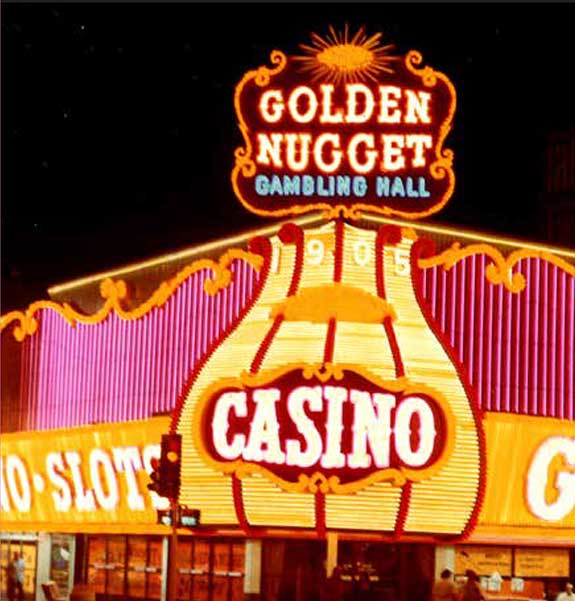
Golden Nugget (detail) Bull Nose Sign, c.1971, Charles Barnard Photo Collection, photo courtesy of The Neon Museum
Unlike other gay-friendly spots of the era, such as the Red Barn or Maxine’s, which catered to LGBTQ+ patrons only after dark during so-called “pink hours,” Le Café was different. It was openly, proudly, vibrantly gay, all the time. As an out lesbian herself, Jacques made sure the space reflected that spirit. Le Café quickly became the first openly gay bar in Las Vegas and a central hub for community connection.
But Jacques didn’t stop at nightlife. In 1971, she launched Gay Notes From Le Café, Las Vegas’ first LGBTQ+ publication. More than a bar newsletter, it helped ignite activism and community awareness in a city where queer voices had long been pushed into the shadows. The Las Vegas chapter of the Human Rights Campaign later credited the publication with establishing “the political consciousness of Las Vegas’ gay community.”
Jacques also stepped into the public eye as an educator and advocate, speaking on television, lecturing at UNLV, and even addressing audiences at Nellis Air Force Base, remarkable visibility for an openly lesbian woman in the 1970s.
Tragically, the original Le Café era came to an abrupt end on August 24, 1978, when the bar was destroyed in an arson attack. Yet Jacques’ resilience never wavered. She continued working in beloved LGBTQ+ spaces, including the Other Place and Gipsy, throughout the 1980s. In 1983, she revived her dream with Disco Le Café Bar and Restaurant, though the comeback proved short-lived.
Even so, Jacques’ legacy endures. Le Café was more than a bar, it was a landmark of visibility, resistance, and community. In an era defined by silence, Marge Jacques dared to speak out loud, leaving behind a legacy that helped pave the way for the vibrant LGBTQ+ Las Vegas we know today.
Portions of this article, and imagery from The Neon Museum Las Vegas’ collection have been reprinted with permission of the The Neon Museum Las Vegas. To read the article in its original format, and find others, visit: neonmuseum.org
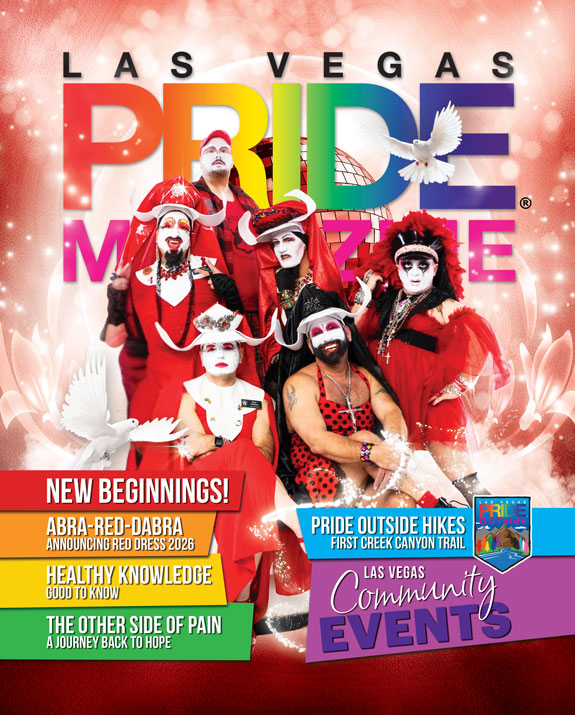
This article was originally published in the 2026 New Beginnings Issue of Las Vegas PRIDE Magazine, and can be read in its original format here.