The Last Frontier of Pride: Why We Can’t Let Our Elders Go Back into the Closet
By Eric Peterson
These days, it seems like my friends and I talk a lot about our aches and pains, Social Security, and Medicare. I suppose it’s normal. I will turn 60 this year, and many in my circle are older. But there’s one topic we don’t talk about enough, and that’s what will happen to us when we age to the point of needing care, what the health care industry typically calls “assisted living.”
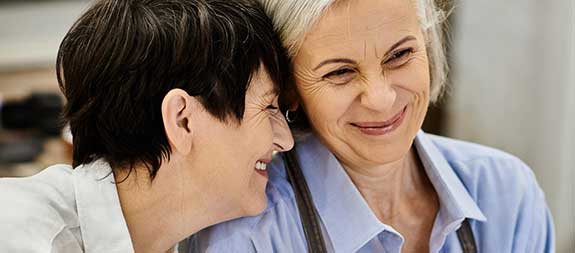
I think we don’t talk about it because it’s uncomfortable. As the “Silver Tsunami” of Baby Boomers aging hits our community, a new and quiet fear is creeping into the lives of LGBTQ+ seniors: the fear of the Second Closet.
We spent our lives fighting for the right to be seen. The LGBTQ+ movement has been defined by the act of coming out. We marched, we mourned a generation lost to a plague, and we painstakingly constructed a “chosen family” when our biological ones turned away. Yet after a lifetime of living out loud, many now face the prospect of living in a place where they feel the need to strip their walls of “incriminating” photos or edit their life stories just to ensure they receive respectful care. According to AARP’s 2024 Dignity report, nearly 34% of LGBTQ+ seniors fear they will have to hide their identity to access safe senior housing.
I read something recently that struck a chord, a sentiment often whispered in our bars and echoed on our social feeds: In the gay community, does “old” begin at forty? The gist of this post that appeared in my Facebook feed was simple. In general society, you aren’t considered an older adult until you’re pushing sixty or sixty-five. But in the hyper-aesthetic, youth-obsessed corners of gay culture, the dating apps, the circuits, the “Instagram-perfect” social circles, the story is different. By thirty-five, you are “mature.” By forty, you are a “gentleman.” By fifty, many feel an unspoken pressure to vacate the spaces they helped build, as if having fun, dancing, or seeking connection has a looming expiration date. There is a quiet, normalized form of ageism within our community; an irony that stings because it comes from the same group that has fought so hard for “inclusion.” But if we only celebrate diversity when it’s young and aesthetic, what kind of community are we actually building?
One day, we will all cross that invisible line from being “the kids” to being “the elders.” And when that day comes, we shouldn’t have to apologize for occupying space. Growing old isn’t a social error or a joke; it is a reason for respect. It is, quite literally, a part of Pride.
So I want to start a conversation about dedicated spaces for aging LGBTQ+ individuals, many of whom meet the demographic reality of the “Solo Ager.”
In the traditional American model of aging, the safety net is woven from biological threads: children and grandchildren who check in on weekends and advocate during hospital stays. But for the LGBTQ+ community, that net is often non-existent. Research from Services & Advocacy for GLBT Elders (SAGE) consistently shows that LGBTQ+ seniors are twice as likely to live alone and four times less likely to have children than their straight peers. I personally saw this play out in real time when I was a hospice worker in the Vegas Valley.
For a 70-year-old lesbian in Summerlin or a 65-year-old gay man in Green Valley, the “chosen family” has been their lifeline for decades. But as that circle ages together, the strength of that lifeline frays. When a partner passes away or a best friend moves into memory care, the solo ager is left to navigate a healthcare system that was never designed for them.
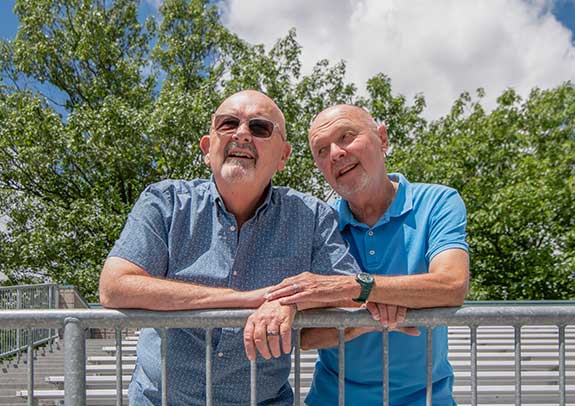
In our community, “family” has always been a verb: something we do, not just something we are born into. But as we age, that informal network faces a structural breaking point. This is where the professional senior living industry must evolve. True advocacy in this space isn’t just about checking a box on a form; it’s about having staff trained to act as the “Chosen Family” advocate.
Imagine a concierge who doesn’t just coordinate transportation but ensures that your doctor is truly affirming. Imagine an on-site advocate who understands that for a transgender elder, the dignity of being addressed by their correct name and pronouns is a clinical necessity for mental health. We aren’t just looking for caregivers; we are looking for a guardrail against the systemic bias that often awaits us at the pharmacy counter.
We don’t need to reinvent the wheel to make this a reality. By utilizing a “Value-Add” model: finding existing assisted living facilities in neighborhoods like Summerlin or Henderson and repositioning them as vibrant, niche-market hubs, we can act quickly. The infrastructure is there; what is missing is the soul.
True Pride requires us to ask: What happens to the people who made today possible? The pioneers who stood their ground when it was illegal to dance with a same-sex partner deserve more than a beige room and a silent dinner. They deserve a victory lap. They deserve a community that recognizes their “chosen family” and honors their history.
Creating this space isn’t just about real estate; it’s about honoring a covenant. We promised one another, decades ago, that we would never go back. By building these sanctuaries now, we could ensure that the “Second Closet” remains a relic of the past, and that for our community, the golden years are spent exactly as they should be: in the sunlight, in the company of friends, and entirely, unapologetically ourselves.
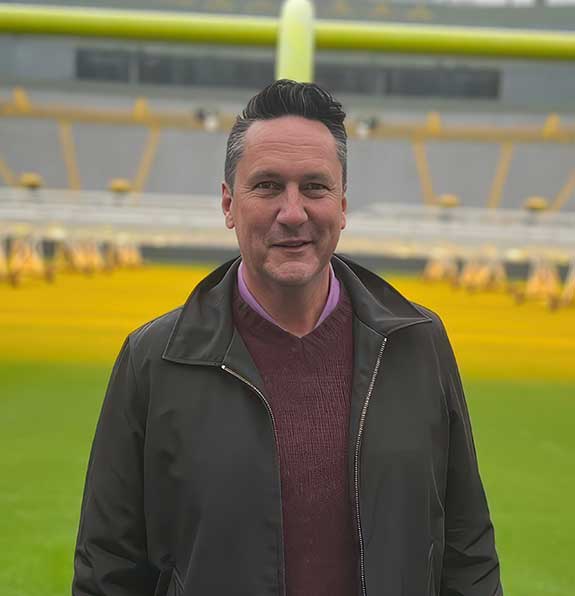
Eric Peterson is a longtime Las Vegas community leader who has always been dedicated to making a difference in our community. He is presently looking into numerous locations across the Las Vegas valley to establish a facility that provides long-term solutions for senior living and existence.
This article was originally published in the 2026 PRIDE Month & Community Issue of Las Vegas PRIDE Magazine, and can be read in its original format here.