The Green Shack: A Hidden Landmark in Las Vegas LGBTQ+ History
Courtesy of The Neon Museum Collection
Long before the bright lights of the Strip defined Las Vegas entertainment, there was The Green Shack, a beloved local spot that quietly helped shape the city’s cultural and social history.
Originally opened by Mattie Jones around 1929, The Green Shack began humbly as a kitchen-window operation serving hearty meals to dam workers. Frank Sinatra and Dean Martin reportedly dined there, as did “Bugsy” Siegel, who was said to have been a regular customer during the construction of the Flamingo.
The atmosphere was country casual, complete with wagon wheels and a hitching post. Fried chicken was the specialty of the house, made in the original cast iron skillets. Chicken livers and gizzards were also available, either separately or as a giblet combination plate. “Homemade” bread pudding was a popular dessert, but the recipe remains a closely guarded family secret.
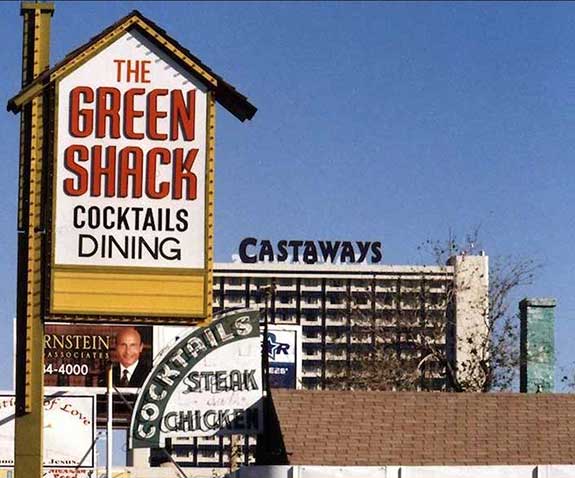
The Green Shack c. 2000, The Neon Museum Collection
Over the years, its reputation grew, drawing in local politicians, civic leaders, and everyday residents alike. But beyond its famous fried chicken and home-style fare, The Green Shack also became a hub for entertainment that pushed boundaries and made history.
In 1940, the venue hosted variety performers Hot-Cha Hinton and Billy Richards, whose acts were billed as “amusing” and “dynamic.”
Hinton, known for her wit, charisma, and trailblazing courage, was a pioneering transgender performer who used her platform to advocate for LGBTQ+ rights long before such conversations were commonplace.
Richards, who was promoted as “The Entertainment Sensation of the World,” is among the earliest known examples of female impersonation in Las Vegas.
From its modest beginnings to its decades-long run, The Green Shack was more than just a restaurant, it was a reflection of a changing city and a stage for inclusion long before Las Vegas became known for its dazzling diversity. Though the building no longer stands, its legacy endures as a reminder that queer history has always been part of the Vegas story.
This article was originally published in the 2025 Holiday Issue of Las Vegas PRIDE Magazine, and can be read in its original format here.